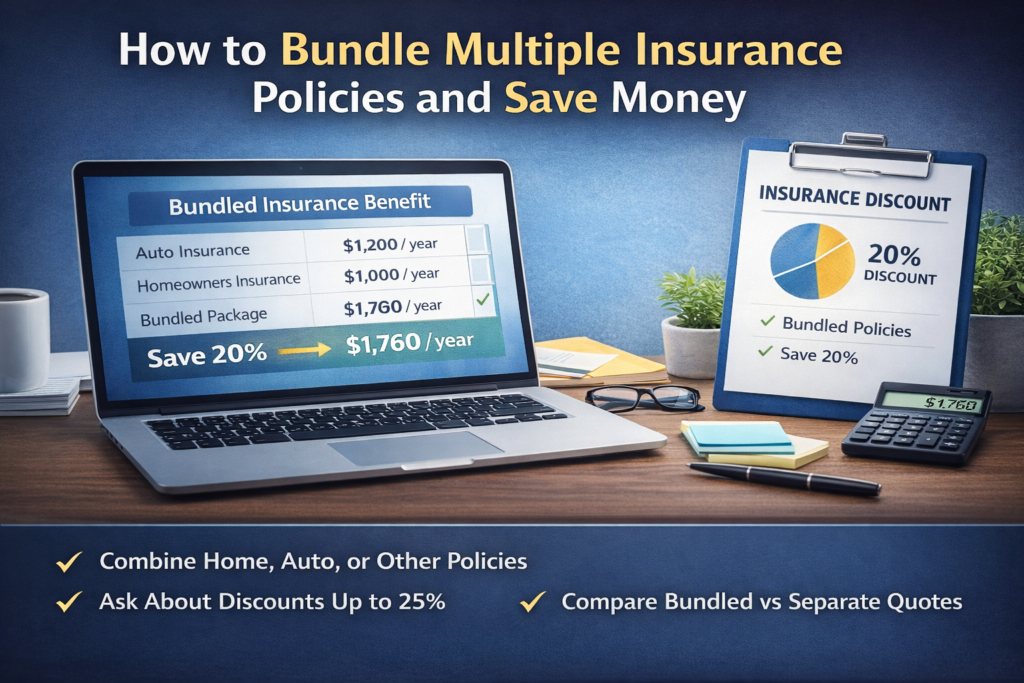
Bundling insurance policies is one of the most common and effective ways to reduce overall insurance costs. Many insurance companies reward customers who purchase multiple policies by offering significant discounts.
This guide explains how insurance bundling works, which policies can be bundled, how much you can realistically save, and when bundling may not be the best option.
1. What Does It Mean to Bundle Insurance Policies
Bundling insurance means purchasing two or more policies from the same insurance company.
Common bundled combinations include:
- Auto and homeowners insurance
- Auto and renters insurance
- Home and umbrella insurance
- Business insurance packages
Insurance companies prefer bundled customers because they are more likely to stay long-term.
2. How Much Can You Save by Bundling Insurance
Savings from bundling vary depending on the insurer and policies involved.
Typical savings ranges:
- Auto + Home: 10% to 25%
- Auto + Renters: 5% to 15%
- Multiple business policies: up to 30%
The more policies you bundle, the larger the potential discount.
3. Most Common Insurance Bundles Explained
Auto and Home Insurance
This is the most popular bundle. Homeowners often receive the highest discounts when combining these policies.
Auto and Renters Insurance
Renters insurance is inexpensive on its own, but bundling it with auto insurance can still produce meaningful savings.
Home and Umbrella Insurance
An umbrella policy increases liability protection and is often discounted when added to an existing home policy.
Business Insurance Packages
Small businesses frequently bundle general liability, property, and professional liability insurance.
4. Pros of Bundling Insurance Policies
Bundling offers several advantages:
- Lower overall premiums
- One insurance company to manage
- Fewer bills and renewal dates
- Simplified claims process
For many people, convenience is just as valuable as the savings.
5. Cons of Bundling Insurance Policies
Bundling is not always the best option.
Potential downsides include:
- Higher prices for one policy offsetting savings
- Limited flexibility to switch providers
- Weaker coverage in certain areas
Sometimes separate policies from different insurers offer better value.
6. When Bundling Makes Sense
Bundling is usually a good choice if:
- One insurer offers strong coverage for all policies
- The discount is significant
- Customer service and claims handling are reliable
Bundling works best when coverage quality remains high.
7. When You Should Avoid Bundling
Bundling may not be ideal if:
- One policy is overpriced
- Coverage options are limited
- Claims reputation is poor
Always compare bundled and unbundled quotes before deciding.
8. How to Compare Bundled vs Separate Policies
To make the right decision:
- Get bundled quotes
- Get separate quotes from different insurers
- Compare coverage, not just price
- Review deductibles and exclusions
Never assume bundling is automatically cheaper.
9. Tips to Maximize Bundling Discounts
To get the best deal:
- Ask about all available discounts
- Request written quotes
- Review policies annually
- Negotiate before renewal
Insurance pricing changes over time, so regular review is essential.
Call to Action
Compare bundled and separate insurance quotes today and choose the option that offers the best balance of savings, coverage, and reliability.