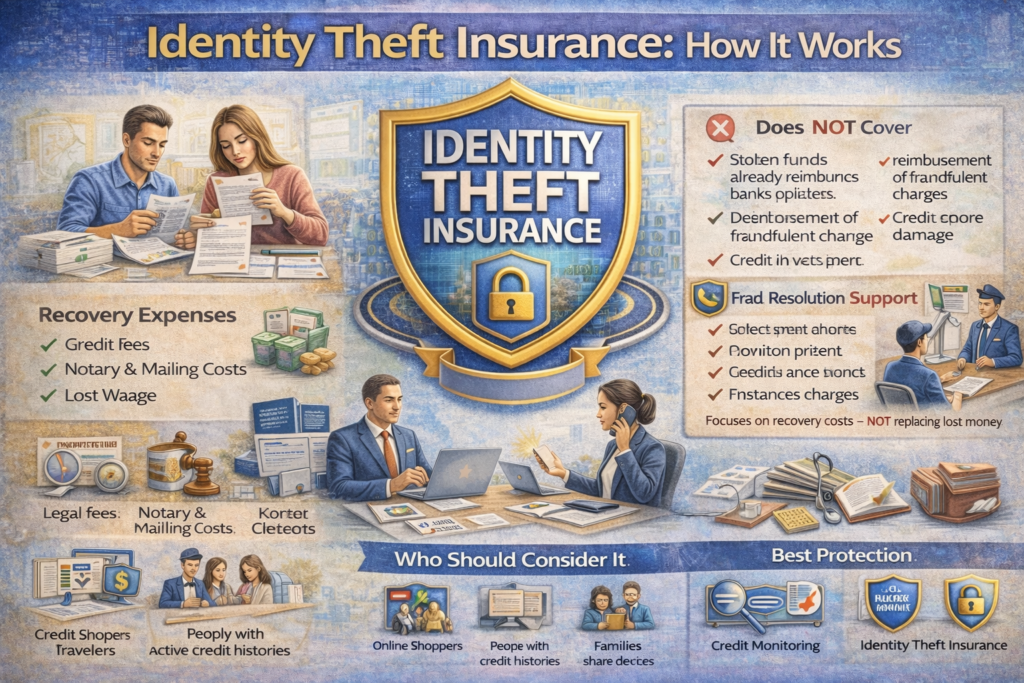
Identity theft is one of the fastest-growing financial crimes, affecting millions of people each year. Stolen personal information can be used to open credit accounts, file fraudulent tax returns, or drain bank accounts—often without immediate detection. Identity theft insurance is designed to help victims recover financially and restore their identity after fraud occurs. This guide explains how identity theft insurance works, what it covers, and when it’s worth having.
What Is Identity Theft Insurance?
Identity theft insurance is a type of coverage that helps pay for expenses related to recovering your identity after it has been stolen or misused. Unlike traditional insurance, it does not usually reimburse stolen money directly—instead, it covers the cost of recovery.
Coverage is often available as:
A standalone policy
An add-on to homeowners or renters insurance
A feature bundled with credit monitoring services
What Identity Theft Insurance Covers
Recovery Expenses
Identity theft insurance typically covers out-of-pocket costs associated with restoring your identity, such as:
Legal fees
Lost wages due to time off work
Notary and mailing costs
Credit report and monitoring fees
Costs to correct records
These expenses can add up quickly without coverage.
Identity Restoration Services
Most policies include access to identity restoration specialists. These professionals help guide you through the recovery process, contact creditors, dispute fraudulent charges, and work with credit bureaus.
This service alone can save dozens of hours and significant stress.
Fraud Resolution Support
If your identity is used to commit fraud, insurance may provide:
Assistance filing police reports
Help contacting financial institutions
Support during disputes with creditors
Guidance through government agencies
This support is especially valuable during complex or long-lasting cases.
What Identity Theft Insurance Does NOT Cover
It’s important to understand the limitations. Identity theft insurance usually does not cover:
Stolen funds already reimbursed by banks
Direct reimbursement of fraudulent charges
Emotional distress or credit score damage
Fraud caused by intentional sharing of information
Business identity theft (unless specifically included)
Coverage focuses on recovery costs—not replacing lost money.
How Identity Theft Insurance Claims Work
If you suspect identity theft:
Report the fraud immediately to your insurer
Submit documentation such as police reports or affidavits
Work with an assigned identity restoration specialist
Track covered expenses related to recovery
Reimbursement is typically issued after expenses are verified.
How Much Coverage Do You Need?
Coverage limits vary by policy, commonly ranging from tens of thousands of dollars. Higher limits may be appropriate if you:
Have significant financial assets
Frequently share information online
Travel often
Run a business or manage complex finances
For many individuals, moderate limits are sufficient due to included restoration services.
Identity Theft Insurance vs Credit Monitoring
Credit monitoring alerts you to suspicious activity but does not help pay for recovery costs. Identity theft insurance often includes monitoring plus financial and professional support.
The best protection usually combines both monitoring and insurance.
Who Should Consider Identity Theft Insurance?
Identity theft insurance is especially useful for:
People with active credit histories
Online shoppers and frequent travelers
Families sharing personal devices
Individuals who want hands-on recovery support
While anyone can benefit, those with more financial complexity face higher risk.
Common Misconceptions About Identity Theft Insurance
“It prevents identity theft”
“It replaces stolen money”
“Banks handle everything”
“Only wealthy people need it”
In reality, identity theft insurance helps after theft occurs and reduces recovery burden—not risk itself.
How to Choose the Right Policy
Check coverage limits and exclusions
Confirm restoration services are included
Understand reimbursement vs assistance
Review claim procedures
Compare bundled options vs standalone policies
Choosing a policy with strong restoration support is often more valuable than high reimbursement limits.
Final Thoughts
Identity theft insurance doesn’t stop fraud—but it makes recovery faster, easier, and far less expensive. In a world where personal data is constantly at risk, having professional support and financial protection after identity theft can make a major difference.
The true value of identity theft insurance isn’t just money—it’s time, guidance, and peace of mind.