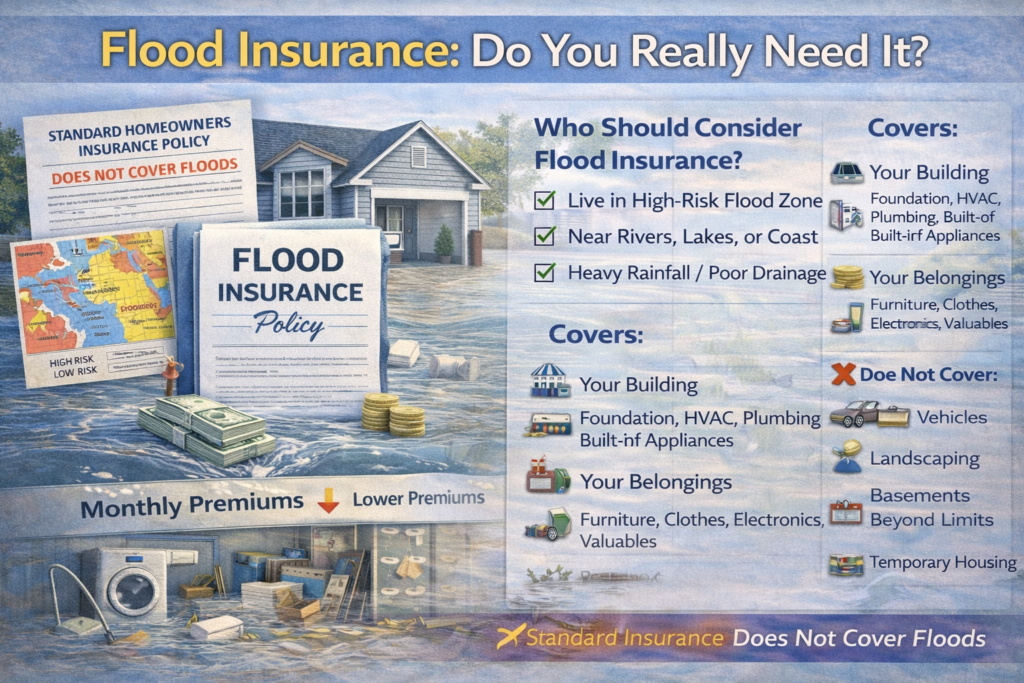
Flooding is one of the most common and costly natural disasters, yet it’s also one of the most misunderstood when it comes to insurance. Many homeowners and renters assume flood damage is covered by standard insurance policies—only to find out after a loss that it isn’t. This article helps you determine whether flood insurance is truly necessary for your situation and what risks you may be overlooking.
What Is Flood Insurance?
Flood insurance is a separate policy designed to cover damage caused by flooding. Flooding is defined as excess water on normally dry land, such as overflow from rivers, storm surge, heavy rainfall accumulation, or rapid snowmelt.
Standard homeowners and renters insurance do not cover flood damage, regardless of the cause.
Why Flood Damage Is Usually Excluded
Flood damage is excluded from standard policies because it often affects many properties at once, creating extremely high losses. Insurers manage this risk separately through dedicated flood insurance programs.
This means even water damage from a severe storm may be excluded if it’s classified as flooding rather than wind-driven rain.
Who Needs Flood Insurance?
Flood insurance is essential for some people and still highly recommended for others.
You likely need flood insurance if:
You live in a high-risk flood zone
Your mortgage lender requires it
Your home is near rivers, lakes, or coastal areas
Your area experiences heavy rainfall or poor drainage
You should strongly consider flood insurance even if:
You live in a moderate- or low-risk zone
Your property has never flooded before
Your home is on higher ground
A significant portion of flood claims come from areas considered low or moderate risk.
Flood Zones and Risk Levels
Flood zones are determined by flood maps that estimate the likelihood of flooding. High-risk zones have the greatest chance of flooding, but low-risk zones are not flood-proof.
Flood maps can change over time due to development, climate patterns, and infrastructure changes. Past flooding is not the only indicator of future risk.
What Flood Insurance Typically Covers
Flood insurance policies usually include two main types of coverage:
Building Coverage
This covers the structure of your home, including:
Foundation and walls
Electrical and plumbing systems
HVAC equipment
Built-in appliances
Contents Coverage
This covers personal belongings such as:
Furniture and electronics
Clothing
Appliances
Certain valuables
Contents coverage is often optional for homeowners and renters.
What Flood Insurance Does Not Cover
Flood insurance typically does not cover:
Temporary housing expenses
Landscaping and outdoor property
Vehicles
Currency, precious metals, or most valuables
Basements beyond specific limits
Understanding these limitations is essential when evaluating coverage.
How Much Does Flood Insurance Cost?
Flood insurance costs depend on:
Flood zone classification
Home elevation and structure
Coverage limits
Deductibles
Policies in low-risk areas are often more affordable than expected. Waiting until flooding is imminent is not an option—there is usually a waiting period before coverage begins.
Common Misconceptions About Flood Insurance
“I’m not in a flood zone, so I don’t need it”
“My homeowners insurance will cover it”
“My area has never flooded before”
“It’s too expensive”
These assumptions often lead to devastating financial losses after a flood.
Renters and Flood Insurance
Renters are not protected from flood damage by a landlord’s insurance. A renter’s flood insurance policy can cover personal belongings damaged by flooding, offering affordable protection against a major loss.
When Flood Insurance Makes the Most Sense
Flood insurance is most valuable when:
Your home represents a large portion of your net worth
You cannot afford to self-insure flood losses
You live in an area with increasing extreme weather
You want certainty and peace of mind
The cost of insurance is often small compared to the cost of flood recovery.
Final Thoughts
Flood insurance isn’t just for high-risk zones—it’s for anyone who wants protection from one of the most common and expensive disasters. Standard insurance leaves a critical gap, and flood damage can happen almost anywhere.
The real question isn’t “Will it flood?”—it’s “Can I afford it if it does?”