Choosing between liability-only and full coverage auto insurance is one of the most important decisions drivers make. The right choice affects not only your monthly premium but also how much financial risk you carry after an accident. Understanding the real differences helps you avoid underinsurance—or paying for coverage you don’t need.
What Is Liability Auto Insurance?
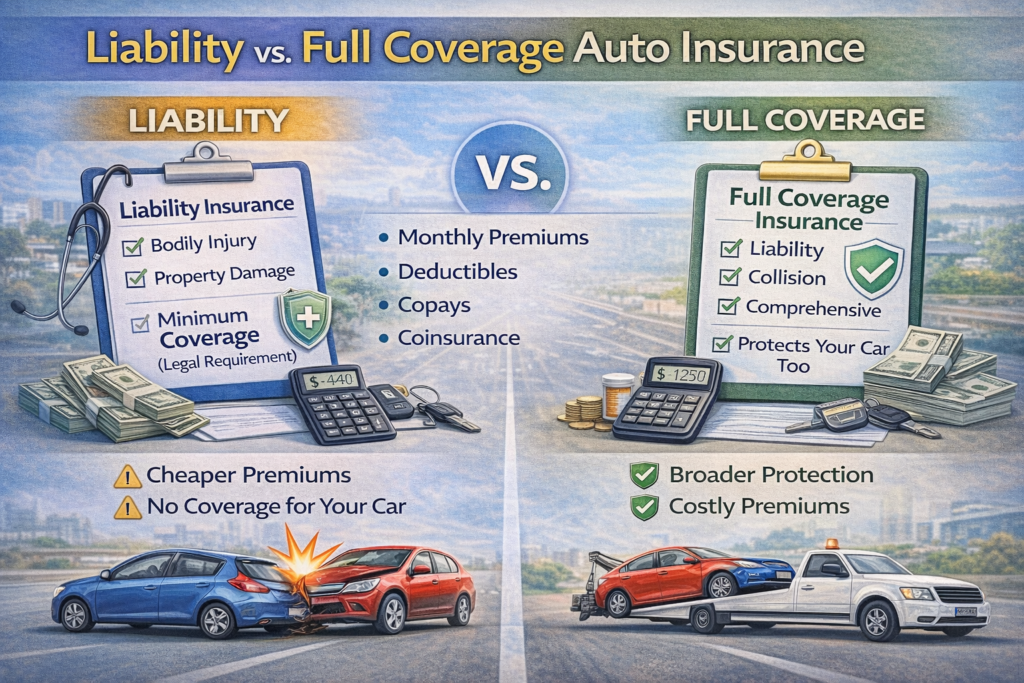
Liability insurance is the minimum coverage required by law in most states. It covers damages you cause to other people but does not cover your own vehicle.
Liability insurance includes:
Bodily injury liability – pays for medical expenses, lost wages, and legal costs for others
Property damage liability – pays for damage to another person’s vehicle or property
If you cause an accident, liability insurance protects others, not you.
What Is Full Coverage Auto Insurance?
Full coverage is not a single policy—it’s a combination of coverages that protect both you and others.
Full coverage typically includes:
Liability insurance
Collision coverage – pays to repair or replace your car after an accident, regardless of fault
Comprehensive coverage – covers non-collision damage such as theft, vandalism, fire, weather, or animal strikes
Full coverage offers broader financial protection but comes at a higher cost.
Key Differences Between Liability and Full Coverage
Liability insurance is designed to meet legal requirements and minimize upfront costs. It does not help repair or replace your own car.
Full coverage provides protection for your vehicle and is often required if you lease or finance your car.
Liability is cheaper but exposes you to greater financial risk. Full coverage costs more but reduces out-of-pocket expenses after accidents or unexpected events.
When Liability Insurance May Be Enough
Liability-only insurance can make sense if:
Your car is older and has low market value
You can afford to replace your vehicle out of pocket
You drive infrequently
You want the lowest possible premium
If the cost of full coverage exceeds the value of your car, liability may be the practical choice.
When Full Coverage Is the Better Option
Full coverage is usually the smarter choice if:
Your car is new or expensive
You are leasing or financing the vehicle
You cannot afford major repair or replacement costs
You live in an area with high theft, vandalism, or weather risk
Lenders almost always require full coverage to protect their investment.
Cost Comparison: Liability vs Full Coverage
Liability insurance typically costs significantly less per month. Full coverage premiums are higher because insurers take on more risk.
However, a single accident without full coverage can cost far more than years of higher premiums. Cost should be weighed against potential financial exposure.
Deductibles and Their Role
Full coverage policies include deductibles for collision and comprehensive claims. Choosing a higher deductible lowers your premium but increases out-of-pocket costs when filing a claim.
Liability-only policies do not have deductibles because they don’t cover your vehicle.
Common Mistakes Drivers Make
Choosing liability only to save money without understanding the risk
Keeping full coverage on a car worth less than the premium cost
Not adjusting coverage after paying off a vehicle
Assuming “full coverage” means everything is covered
Ignoring state minimum liability limits
Avoiding these mistakes ensures your coverage matches your real needs.
How to Decide What’s Right for You
Ask yourself:
What is my car worth today?
Could I afford to replace it tomorrow?
Do I have savings for unexpected losses?
Is my car financed or leased?
How much risk am I comfortable taking?
Your answers determine whether liability or full coverage makes sense.
Final Thoughts
Liability and full coverage auto insurance serve very different purposes. Liability keeps you legal and protects others. Full coverage protects your vehicle and your financial stability.
The best choice balances cost, risk, and peace of mind—not just the lowest premium.