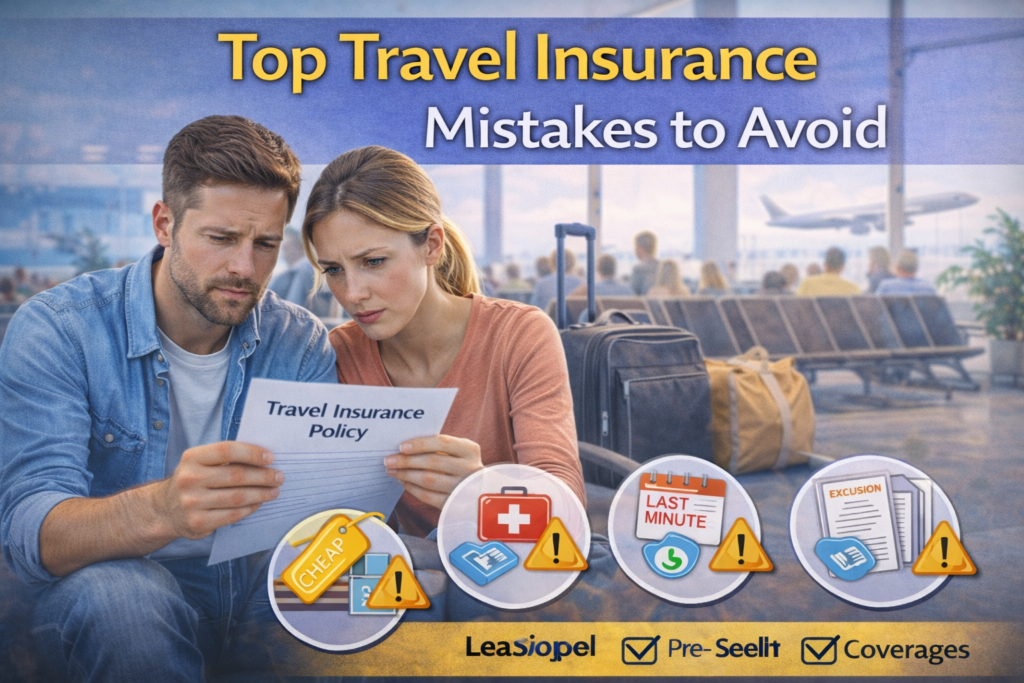
Travel insurance can save you thousands of dollars when trips go wrong—but only if it’s chosen and used correctly. Many travelers buy insurance at the last minute, misunderstand coverage, or assume they’re protected when they’re not. These common mistakes often surface only after a claim is denied. Below are the most important travel insurance mistakes to avoid so you can travel with confidence and real protection.
1. Assuming Travel Insurance Covers Everything
One of the biggest mistakes is believing travel insurance is all-inclusive. In reality, policies have clear limits, exclusions, and conditions.
Not all reasons for trip cancellation, medical care, or delays are covered. Always review what events are considered “covered reasons” before purchasing.
2. Buying Travel Insurance Too Late
Waiting until the day before departure can limit coverage options. Many benefits—such as coverage for pre-existing medical conditions or “cancel for any reason” upgrades—are only available if insurance is purchased shortly after booking the trip.
Buying early gives you broader protection and more flexibility.
3. Ignoring Pre-Existing Condition Rules
Most travel insurance policies exclude pre-existing medical conditions unless you qualify for a waiver. Travelers often assume medical emergencies will be covered regardless of health history.
Failing to meet waiver requirements can result in denied medical claims, especially for older travelers.
4. Choosing the Cheapest Policy Without Comparing Coverage
Low-cost travel insurance may come with low coverage limits, high deductibles, or major exclusions. Choosing price over protection often leads to insufficient coverage during emergencies.
The best value policy balances cost with strong medical, evacuation, and cancellation benefits.
5. Underestimating Medical and Evacuation Costs Abroad
Medical care outside your home country can be extremely expensive, and many domestic health insurance plans offer little or no international coverage.
Emergency medical evacuation alone can cost tens of thousands of dollars. Inadequate limits can leave you paying out of pocket.
6. Not Checking Coverage for Activities and Destinations
Many policies exclude high-risk activities such as skiing, scuba diving, hiking at altitude, or adventure sports. Certain destinations may also be excluded due to government travel advisories.
Always confirm that your planned activities and destinations are covered.
7. Assuming Credit Card Travel Insurance Is Enough
Some credit cards offer limited travel insurance benefits, but coverage is often secondary, restricted, or capped at low limits.
Relying solely on credit card insurance may leave significant gaps, especially for medical emergencies and evacuation.
8. Forgetting to Document Expenses and Delays
Claims require documentation. Travelers who fail to save receipts, boarding passes, or written confirmations often face delays or denials.
Keep records of all expenses, delays, medical visits, and communications related to your trip.
9. Misunderstanding Trip Cancellation vs Trip Interruption
Trip cancellation covers losses before departure, while trip interruption applies after the trip has started. Many travelers confuse the two and expect reimbursement for situations that aren’t covered.
Understanding the difference helps set realistic expectations.
10. Not Reading the Policy Details
Skipping the policy wording is a costly mistake. Important details such as exclusions, claim deadlines, and documentation requirements are outlined in the policy—not the marketing summary.
Taking a few minutes to read the policy can prevent major surprises later.
How to Avoid These Mistakes
Buy travel insurance soon after booking
Compare coverage, not just price
Check medical and evacuation limits carefully
Confirm coverage for activities and destinations
Read exclusions and policy conditions
Keep all travel and expense documentation
Final Thoughts
Travel insurance is meant to protect you from the unexpected—but only if you understand how it works. Avoiding these common mistakes ensures your policy provides real financial protection when plans change or emergencies occur.
Smart travelers don’t just buy insurance—they buy the right insurance.