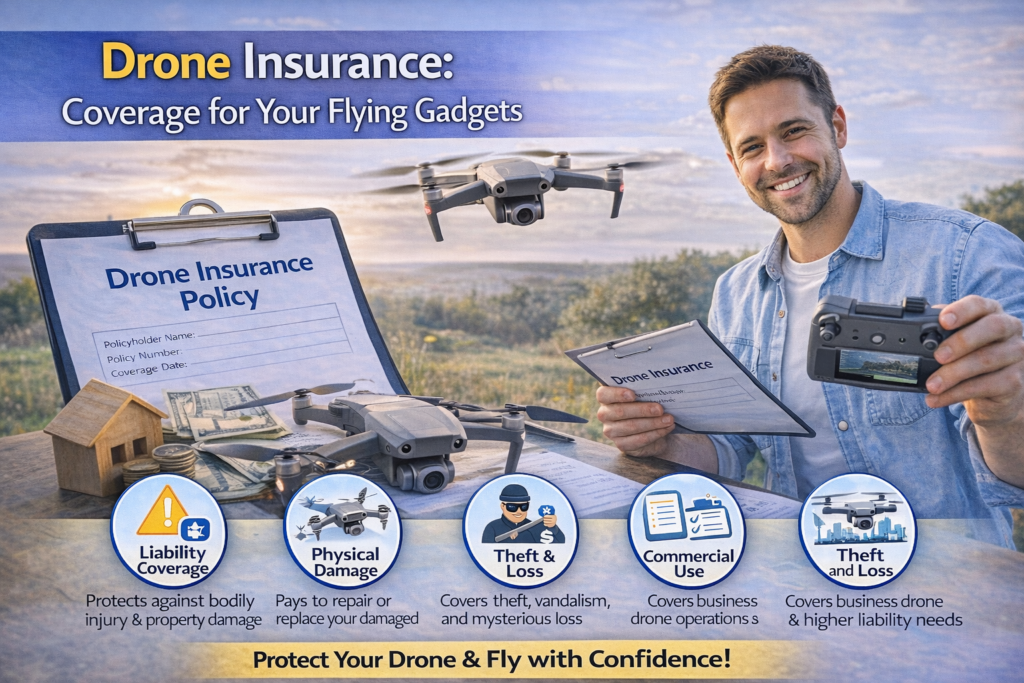
Drones are no longer just toys—they’re valuable tools used for photography, videography, inspections, mapping, and recreation. As drones become more advanced and expensive, the risks associated with flying them increase. Drone insurance provides financial protection against accidents, damage, theft, and liability claims, helping drone owners fly with confidence.
What Is Drone Insurance?
Drone insurance is a specialized policy designed to cover unmanned aerial vehicles (UAVs) and the risks associated with operating them. Coverage can apply to recreational hobbyists, professional pilots, and businesses using drones for commercial purposes.
Policies can be short-term (per flight), monthly, or annual depending on usage.
Why Drone Insurance Is Important
Even experienced pilots can lose control due to weather, signal interference, or mechanical failure. A single accident can result in costly repairs, lost equipment, or third-party damage.
Without insurance, drone owners may be personally responsible for:
- Repairing or replacing damaged drones
- Paying for property damage
- Covering medical bills if someone is injured
- Legal defense costs and settlements
Drone insurance helps manage these risks.
Liability Coverage for Drones
Liability coverage is the most critical part of drone insurance. It protects you if your drone causes bodily injury or property damage to others.
Examples include crashing into a vehicle, damaging a building, or injuring a bystander. Liability coverage often includes legal defense costs, which can be substantial even for minor incidents.
Commercial operators typically require higher liability limits than recreational users.
Physical Damage Coverage
Physical damage coverage pays to repair or replace your drone if it is damaged due to a covered event such as:
- Crashes or hard landings
- Collisions with objects
- Weather-related damage
- Accidental drops during transport
This coverage can apply to the drone body, camera, gimbal, and attached equipment.
Theft and Loss Protection
Drones are portable and valuable, making them a target for theft. Some policies cover theft, vandalism, or mysterious disappearance.
Coverage may apply whether the drone is stolen from your vehicle, home, or job site, depending on policy terms.
Coverage for Commercial Drone Use
If you use a drone for business purposes—such as aerial photography, real estate marketing, surveying, or inspections—standard homeowners or renters insurance usually does not apply.
Commercial drone insurance may include:
- Higher liability limits
- Coverage for client-required certificates
- Equipment coverage for multiple drones
- Coverage for hired or rented drones
Many clients and job sites require proof of insurance before allowing drone operations.
What Drone Insurance Usually Does Not Cover
Drone insurance policies often exclude:
- Intentional or reckless flying
- Operating outside legal regulations
- Flying without required certifications
- Normal wear and tear
- Software or firmware issues
Understanding exclusions is essential to avoid denied claims.
Recreational vs Commercial Drone Insurance
Recreational drone pilots may need basic liability and damage coverage for personal use. Commercial pilots typically require more comprehensive policies with higher limits and regulatory compliance.
Flying for compensation—even occasionally—usually qualifies as commercial use.
How Much Does Drone Insurance Cost?
Costs depend on factors such as:
- Drone value and equipment cost
- Usage type (recreational vs commercial)
- Coverage limits
- Pilot experience
- Flight environment and risk level
Basic recreational coverage can be affordable, while commercial policies cost more due to higher risk exposure.
How to Choose the Right Drone Insurance Policy
Determine how and where you fly
Confirm whether your use is recreational or commercial
Choose adequate liability limits
Insure the full value of your equipment
Review exclusions and regulatory requirements
Selecting the right policy ensures protection without unnecessary costs.
Final Thoughts
Drone insurance is essential for anyone who owns or operates a flying gadget—whether for fun or profit. From liability protection to equipment coverage, the right policy protects your investment and shields you from unexpected financial risks.
As drone technology continues to grow, flying insured isn’t just smart—it’s responsible.