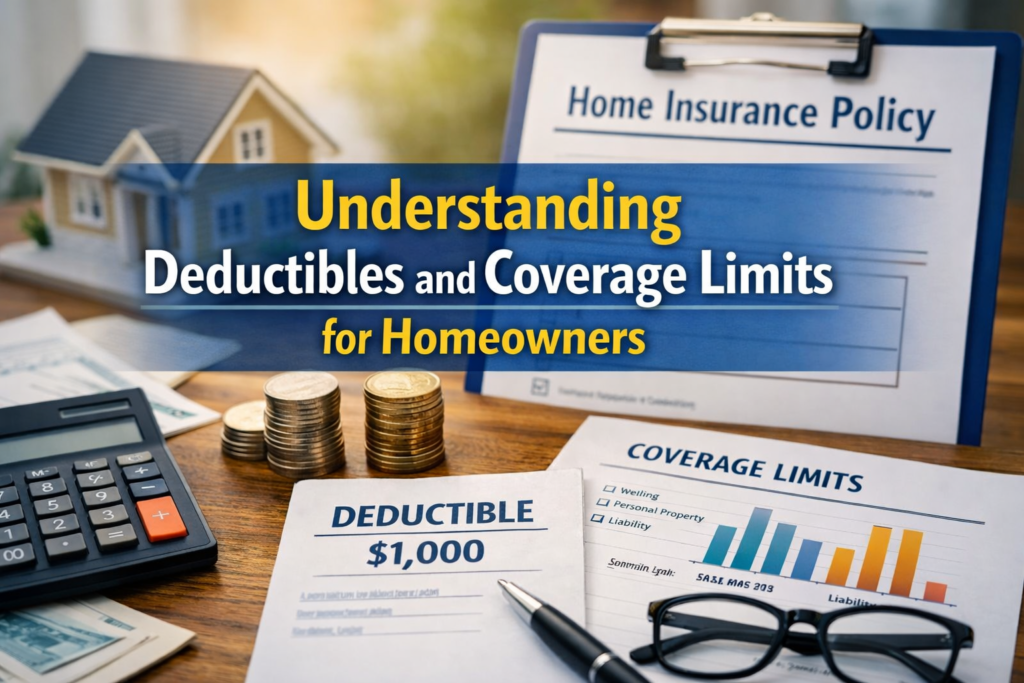
Homeowners insurance can be confusing, especially when it comes to deductibles and coverage limits. These two elements directly affect how much you pay out of pocket and how much your insurance company will cover after a claim. Understanding how they work helps you choose the right policy and avoid unpleasant surprises.
What Is a Deductible in Homeowners Insurance?
A deductible is the amount you must pay yourself before your insurance coverage kicks in. If your deductible is $1,000 and a covered loss costs $10,000 to repair, you pay the first $1,000 and the insurer pays the remaining $9,000.
Deductibles apply to most types of claims, including damage from fire, storms, theft, or vandalism. Some policies have separate deductibles for specific risks, such as hurricanes or wind damage.
Types of Homeowners Insurance Deductibles
There are two common deductible structures:
A flat dollar deductible is a fixed amount, such as $500, $1,000, or $2,500, regardless of the home’s value.
A percentage deductible is based on a percentage of the insured value of the home. For example, a 2% deductible on a $300,000 home means you pay $6,000 before coverage applies.
Percentage deductibles are often used for natural disasters and can significantly increase out-of-pocket costs.
How Deductibles Affect Your Premium
Higher deductibles usually result in lower monthly premiums because you are taking on more financial risk. Lower deductibles mean higher premiums but less expense when a claim occurs.
Choosing the right deductible depends on your savings, risk tolerance, and how often you expect to file claims.
What Are Coverage Limits?
Coverage limits are the maximum amounts your insurance company will pay for different parts of your policy. These limits are clearly defined in your homeowners insurance contract and apply separately to various types of coverage.
If repair or replacement costs exceed your coverage limit, you are responsible for the difference.
Common Coverage Limits in Homeowners Insurance
Dwelling coverage limits apply to the structure of your home, including walls, roof, and built-in systems.
Personal property limits cover your belongings such as furniture, electronics, and clothing. Some items like jewelry, art, or collectibles may have lower sub-limits unless additional coverage is purchased.
Liability limits protect you if someone is injured on your property and you are found legally responsible.
Additional living expenses limits cover temporary housing costs if your home becomes uninhabitable due to a covered loss.
Why Coverage Limits Matter
Setting coverage limits too low can leave you underinsured, forcing you to pay large amounts out of pocket after a serious loss. On the other hand, excessively high limits may increase premiums without providing meaningful additional protection.
Coverage limits should reflect current rebuilding costs, not just the market value of your home.
How to Choose the Right Deductibles and Limits
Review your financial situation and emergency savings
Estimate realistic repair and rebuilding costs
Consider local risks such as storms, floods, or wildfires
Review personal property values regularly
Update your policy after renovations or major purchases
Balancing deductibles and coverage limits ensures you are protected without overpaying for insurance.
Final Thoughts
Deductibles and coverage limits are core components of homeowners insurance that directly impact both cost and protection. By understanding how they work and choosing them carefully, homeowners can avoid financial stress and ensure their policy provides real security when it matters most.