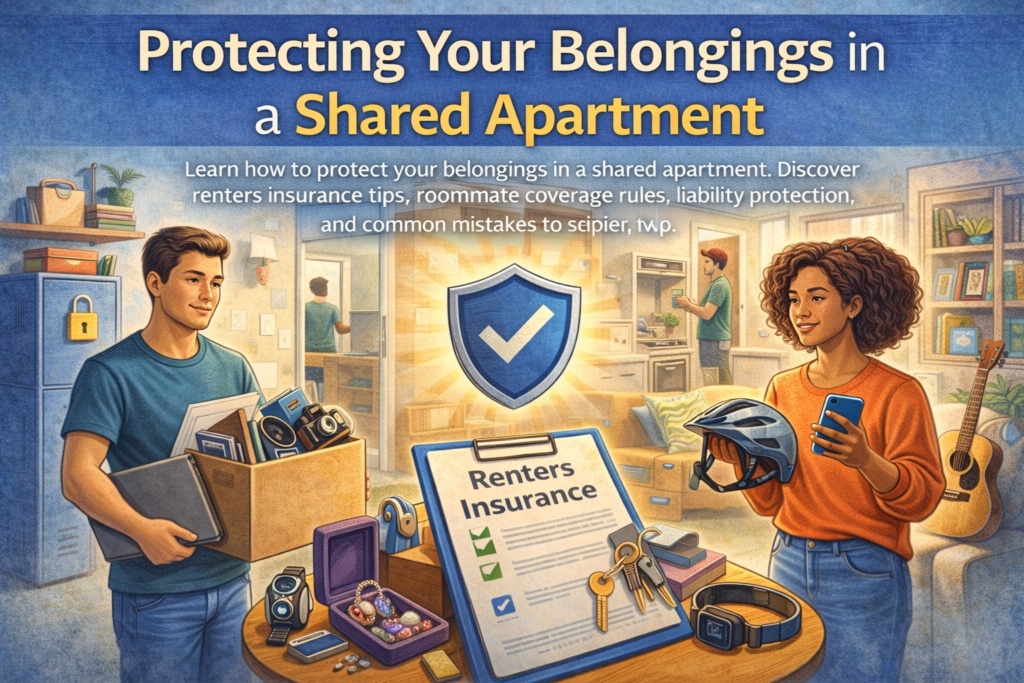
Living in a shared apartment is often affordable and social—but it also comes with unique risks. More people, shared spaces, and frequent guests increase the chances of theft, accidental damage, or liability issues. Many renters assume shared living automatically means shared protection, but when it comes to personal belongings, that’s rarely true.
This guide explains how to protect your belongings in a shared apartment and avoid common mistakes that leave renters financially exposed.
Why Shared Apartments Increase Risk
Shared apartments naturally involve:
More people with access to the space
Higher foot traffic from guests
Shared kitchens, bathrooms, and storage areas
Blurred responsibility for damage or loss
These factors increase the likelihood of accidental damage, theft, or disputes over who is responsible for what.
Understand What Belongs to You—and What Doesn’t
In a shared apartment, each roommate is responsible for their own belongings. If something is stolen or damaged, roommates are not automatically liable for your losses.
Even if you trust your roommates, accidents happen—and trust does not replace insurance.
Renters Insurance Is Essential in Shared Living
Renters insurance is the most effective way to protect your belongings in a shared apartment. It covers your personal property against common risks such as:
Theft
Fire and smoke damage
Water damage from certain causes
Vandalism
Importantly, renters insurance protects your belongings only, not your roommates’ items.
One Policy vs Separate Policies for Roommates
Some roommates try to share one renters insurance policy—but this often creates problems.
Separate policies are usually better because:
Coverage applies only to listed individuals
Claims don’t affect roommates’ insurance history
Disputes over ownership are avoided
Coverage limits are clearer
If you do share a policy, all roommates must be listed—and coverage limits are shared.
Protecting Belongings in Common Areas
Items in shared spaces like living rooms or kitchens are more exposed. To reduce risk:
Avoid leaving valuables unattended
Clearly identify personal items
Store electronics securely
Limit access to guests
Renters insurance may cover common-area items, but documentation is crucial.
Use a Personal Inventory
Creating a personal inventory makes claims much easier. Include:
Photos or videos of belongings
Purchase receipts if available
Estimated replacement costs
Store the inventory digitally so it’s accessible even if your apartment isn’t.
Secure High-Value Items Properly
Jewelry, laptops, cameras, and collectibles may have coverage limits under standard renters insurance.
Consider:
Adding scheduled coverage for valuables
Using lockable storage
Keeping important documents in a secure place
Extra protection ensures full reimbursement if something happens.
Liability Protection Matters More With Roommates
Shared living increases the risk of liability claims. If a guest is injured or you accidentally cause damage to the apartment, liability coverage helps cover:
Medical bills
Legal costs
Property damage
This protection applies even if roommates are involved.
Understand What Isn’t Covered
Renters insurance usually does not cover:
Roommates’ belongings
Intentional damage
Flood or earthquake damage
Normal wear and tear
Knowing exclusions prevents denied claims.
Common Mistakes in Shared Apartments
Assuming the landlord’s insurance covers personal items
Sharing a policy without understanding limits
Not documenting belongings
Ignoring liability coverage
Failing to update insurance after roommates move in or out
Avoiding these mistakes protects both finances and relationships.
How to Stay Protected Over Time
Review your policy annually
Update coverage when buying new items
Adjust coverage when roommates change
Reassess limits if your lifestyle changes
Insurance should evolve with your living situation.
Final Thoughts
Protecting your belongings in a shared apartment requires more than trust—it requires preparation. Renters insurance, clear documentation, and smart security habits ensure that shared living remains affordable and stress-free.
In shared spaces, personal protection matters more than ever.