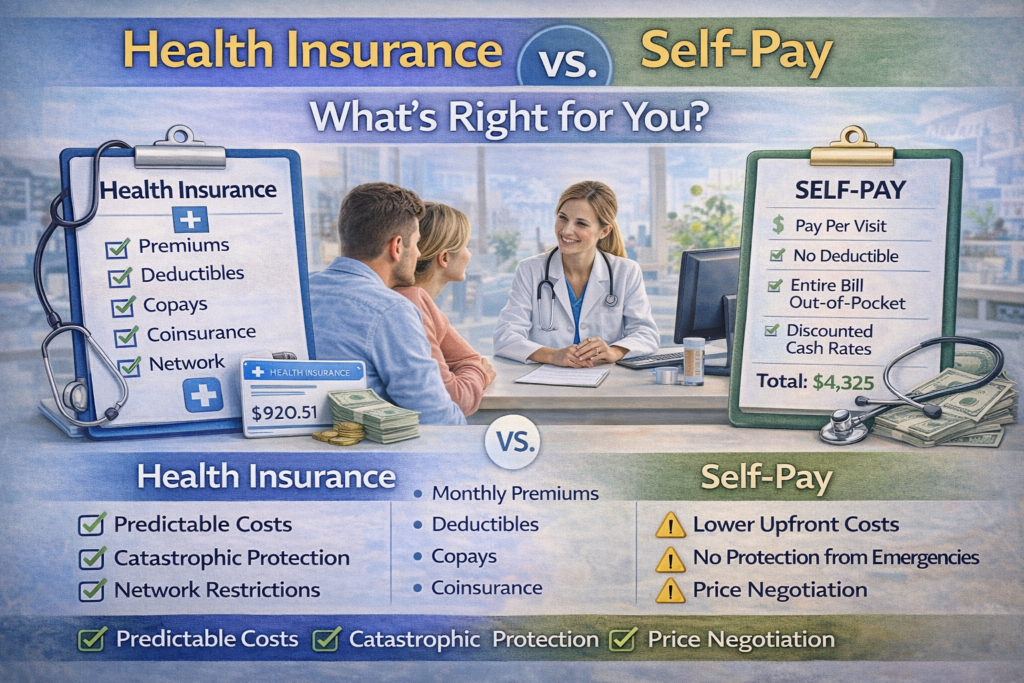
When it comes to medical care, many people face a key decision: rely on health insurance or pay for services out of pocket as a self-pay patient. Each option has advantages and risks, and the right choice depends on your health needs, financial situation, and tolerance for uncertainty. This article breaks down the real differences between health insurance and self-pay so you can make an informed decision.
What Does Health Insurance Mean?
Health insurance is a policy that helps cover medical expenses in exchange for a monthly premium. Depending on the plan, you may also pay deductibles, copayments, and coinsurance before coverage fully applies.
Insurance is designed to protect against high or unexpected medical costs, such as hospitalizations, surgeries, or long-term treatment.
What Is Self-Pay?
Self-pay means you pay medical expenses directly, without using an insurance policy. This can apply to people who are uninsured, underinsured, or choosing not to use insurance for certain services.
Self-pay patients often negotiate prices upfront and pay at the time of service.
Cost Comparison: Insurance vs Self-Pay
Health insurance involves predictable monthly premiums but unpredictable out-of-pocket costs depending on deductibles and coverage limits. Even with insurance, patients may face large bills before meeting their deductible.
Self-pay usually offers lower upfront prices for routine care, especially for doctor visits, labs, imaging, or minor procedures. Many providers offer discounted rates for cash payments.
However, self-pay offers no protection against major medical emergencies, which can result in overwhelming bills.
When Health Insurance Makes More Sense
Health insurance is usually the better option if you:
Have chronic conditions requiring ongoing care
Take prescription medications regularly
Want protection from catastrophic medical costs
Need access to a wide network of specialists and hospitals
Qualify for subsidies that reduce premiums
Insurance provides financial safety and long-term stability when medical needs are unpredictable.
When Self-Pay May Be a Reasonable Choice
Self-pay can make sense if you:
Are generally healthy with minimal medical needs
Only need occasional routine care
Can negotiate and compare provider prices
Have savings to cover unexpected expenses
Prefer simplicity without dealing with claims
Some people use self-pay strategically for certain services even when they have insurance.
Hidden Risks of Self-Pay
The biggest risk of self-pay is exposure to high-cost events. Emergency room visits, hospital stays, or surgeries can quickly reach tens or hundreds of thousands of dollars.
Without insurance, you are responsible for the full amount, and negotiating after treatment is often much harder.
Limitations of Health Insurance
Insurance is not perfect. High deductibles, narrow provider networks, and denied claims can limit access to care. Some people delay treatment because of cost-sharing requirements even when insured.
Understanding your policy details is essential to avoid unexpected bills.
Can You Combine Both Approaches?
Yes. Many people use a hybrid approach:
Insurance for major and emergency care
Self-pay for routine visits, labs, or imaging
Self-pay when providers offer better cash pricing
This strategy can reduce costs while still maintaining protection against large expenses.
Key Questions to Ask Yourself
How often do I use medical services?
Can I afford a high deductible if something goes wrong?
Do I have savings for emergencies?
Do I qualify for subsidized insurance plans?
Is peace of mind important to me?
Your answers help determine which option aligns best with your situation.
Final Thoughts
Health insurance and self-pay each have valid use cases. Insurance offers essential protection against financial disaster, while self-pay can be cost-effective for routine care in low-risk situations.
The right choice isn’t universal—it’s personal. Understanding the trade-offs allows you to choose the approach that protects both your health and your finances.