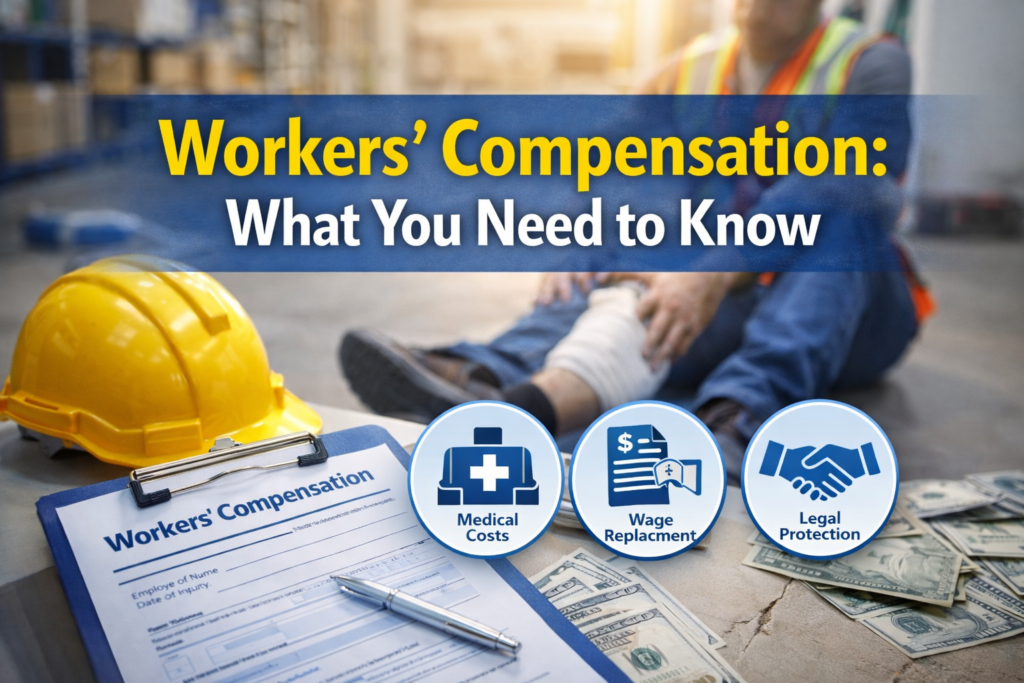
Workers’ compensation insurance is designed to protect both employees and employers when a work-related injury or illness occurs. It provides financial support, medical coverage, and wage replacement while reducing legal risks for businesses. Understanding how workers’ compensation works is essential whether you are an employee or a business owner.
What Is Workers’ Compensation?
Workers’ compensation is a type of insurance that covers employees who are injured or become ill as a direct result of their job. In most cases, it applies regardless of who was at fault. In exchange for receiving benefits, employees typically give up the right to sue their employer for the injury.
Most employers are legally required to carry workers’ compensation insurance, though rules vary by state and by the size or type of business.
What Does Workers’ Compensation Cover?
Workers’ compensation generally covers medical expenses related to a work-related injury or illness. This includes doctor visits, hospital care, medications, rehabilitation, and necessary medical equipment.
It also provides wage replacement if an employee is unable to work temporarily or permanently. Benefits are usually a percentage of the employee’s average wages, not full salary.
In severe cases, workers’ compensation may include disability benefits or death benefits paid to surviving family members.
What Is Not Covered?
Workers’ compensation typically does not cover injuries that occur outside of work duties, injuries caused by intoxication, or injuries resulting from intentional misconduct.
Independent contractors are often excluded, though misclassification issues can complicate coverage. Commuting to and from work is usually not covered unless the job requires travel.
How to File a Workers’ Compensation Claim
The first step is to report the injury to your employer as soon as possible. Delays in reporting can result in denied claims.
Next, seek medical attention and inform the healthcare provider that the injury is work-related. Your employer or insurer will then provide the necessary claim forms.
Once the claim is submitted, the insurance company will review the case and determine eligibility for benefits.
How Long Do Workers’ Compensation Benefits Last?
The duration of benefits depends on the severity of the injury and state regulations. Temporary benefits last until the employee can return to work or reaches maximum medical improvement.
Permanent disability benefits may continue long-term if the injury results in lasting impairment.
Why Workers’ Compensation Matters
For employees, workers’ compensation provides financial security and access to medical care without the burden of legal action. For employers, it reduces liability risks and ensures compliance with labor laws.
Having proper coverage helps maintain trust, stability, and safety in the workplace.
Final Thoughts
Workers’ compensation plays a critical role in protecting workers and businesses alike. Knowing what it covers, how to file a claim, and what to expect can make a difficult situation far more manageable and prevent costly mistakes.