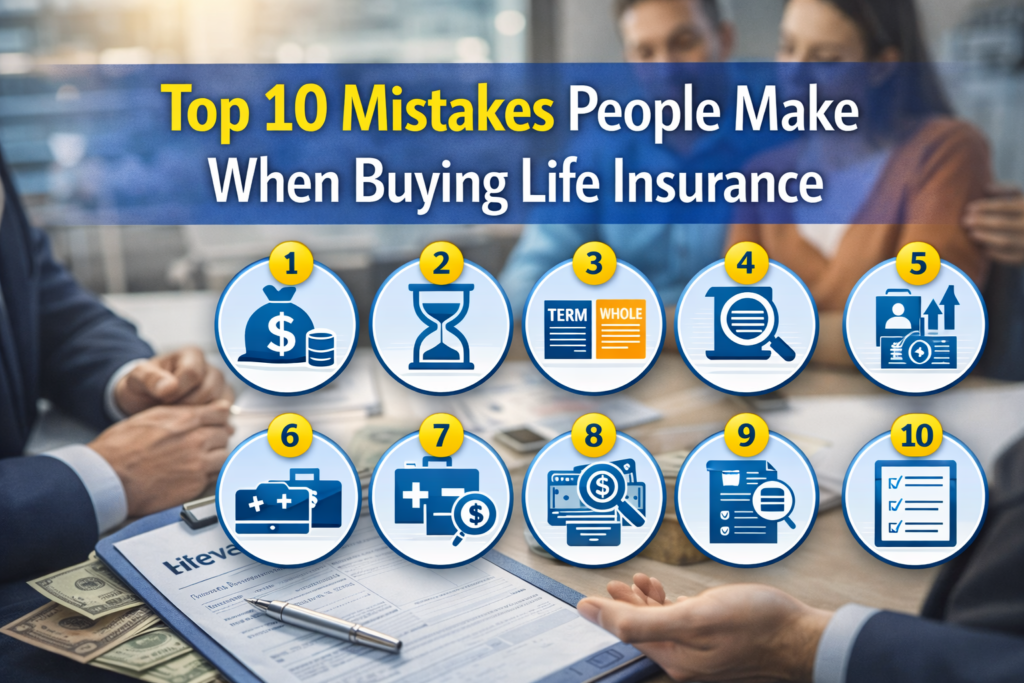
Buying life insurance is a critical financial decision, yet many people make costly mistakes that leave their families underprotected or paying more than necessary. Understanding these common errors can help you choose the right policy, avoid future problems, and ensure your loved ones are financially secure.
1. Buying Too Little Coverage
One of the most common mistakes is underestimating how much life insurance is actually needed. Many people choose a low coverage amount to save on premiums, without considering long-term expenses.
Life insurance should cover outstanding debts, mortgage payments, daily living expenses, education costs, and future financial goals. Inadequate coverage can leave family members struggling financially after a loss.
2. Waiting Too Long to Buy Life Insurance
Delaying the purchase of life insurance often leads to higher premiums or limited options. As you age, insurance becomes more expensive, and health conditions can reduce eligibility or increase costs.
Buying life insurance earlier locks in lower rates and provides protection during unexpected life events.
3. Choosing the Wrong Type of Policy
Many buyers select a policy without fully understanding the difference between term life and permanent life insurance. Term life provides coverage for a specific period, while whole and universal life offer lifetime coverage and potential cash value.
Choosing the wrong type can result in paying for features you don’t need or losing coverage when you still need protection.
4. Ignoring Policy Exclusions and Conditions
Not reading the fine print is a serious mistake. Policies include exclusions, waiting periods, and conditions that affect when and how benefits are paid.
Failing to understand these details can lead to denied claims or unexpected limitations when beneficiaries need the payout most.
5. Naming the Wrong Beneficiary
Outdated or incorrect beneficiary designations can cause legal complications and delays. Life events such as marriage, divorce, or the birth of a child should prompt immediate updates to beneficiary information.
If beneficiaries are not clearly named, benefits may be delayed or distributed in ways you did not intend.
6. Overlooking Inflation and Future Costs
A policy purchased today may not provide enough coverage decades later due to inflation and rising living costs. Many people fail to account for future financial needs when selecting coverage amounts.
Choosing adequate coverage or policies that allow adjustments helps maintain protection over time.
7. Relying Only on Employer-Provided Life Insurance
Employer-provided life insurance is often limited and may not be portable if you change jobs. Relying solely on workplace coverage can leave gaps in protection.
Personal life insurance ensures continuous coverage regardless of employment changes.
8. Not Comparing Multiple Quotes
Accepting the first offer without comparing quotes can result in higher premiums. Different insurers assess risk differently, which means prices can vary significantly.
Comparing multiple providers helps you find better rates and more suitable policy terms.
9. Failing to Disclose Medical Information Accurately
Providing incomplete or inaccurate health information can lead to claim denial later. Even unintentional omissions may be considered misrepresentation.
Honest and accurate disclosure ensures your policy remains valid when it matters most.
10. Not Reviewing the Policy Over Time
Life circumstances change, but many people never review their life insurance after purchase. Changes in income, family size, or financial goals may require policy adjustments.
Regular reviews help ensure your coverage remains aligned with your current situation.
Final Thoughts
Life insurance mistakes can be expensive and emotionally devastating for families. By understanding these common pitfalls and taking the time to choose the right policy, you can secure reliable protection and long-term peace of mind.
Smart planning, careful comparison, and periodic reviews are the keys to making life insurance work for you—not against you.